$15 Kids Picnic Table
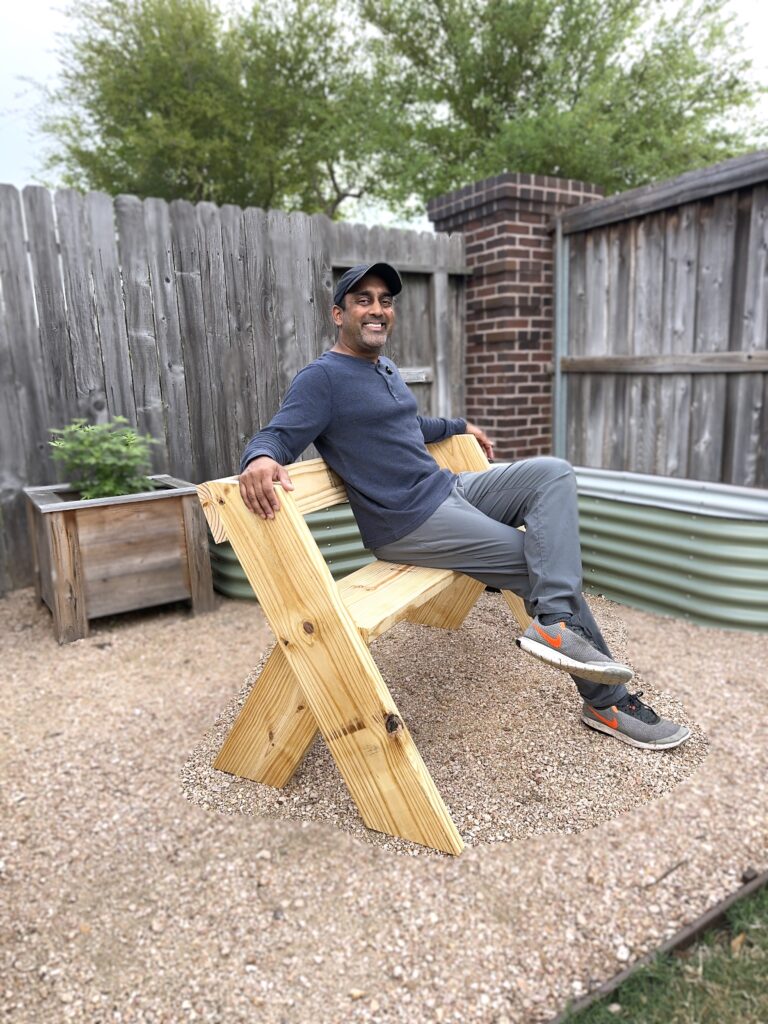
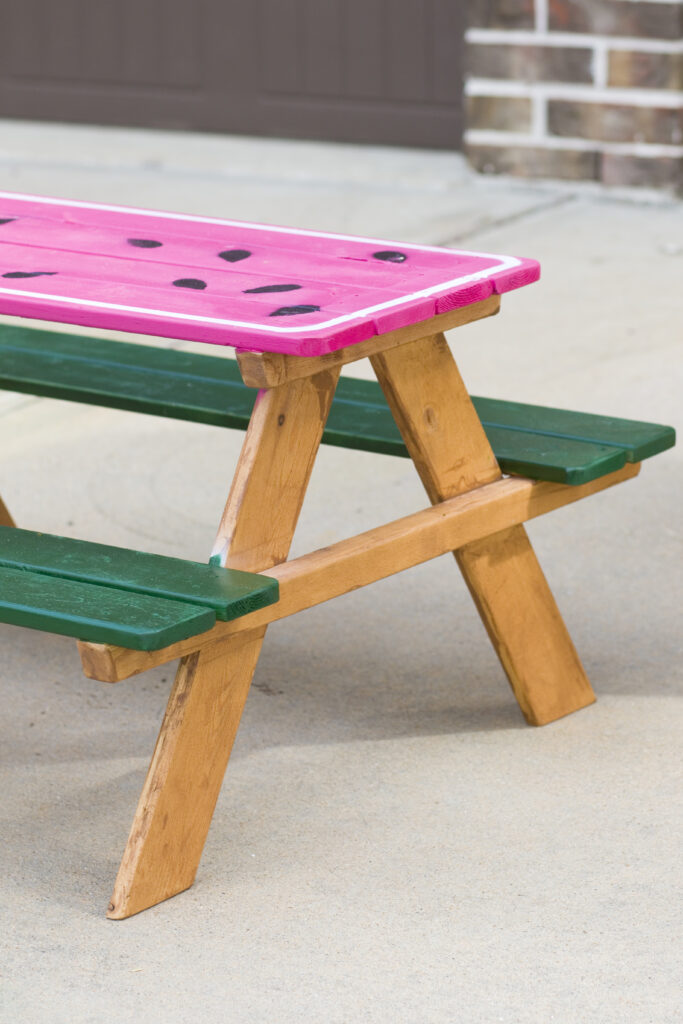
Build a beginner-friendly kids picnic table from four 1×4 furring strips and two 2x2s. The basic table costs about $15 in lumber and can be upgraded with hidden bracing, an umbrella holder, colorful stain, and built-in storage bins.
Materials
For convenience, all of the materials can be found here.
- Four 1×4 x 8-foot furring strips
- Two 2×2 x 8-foot furring strips
- 1 1/2-inch to 1 3/4-inch exterior deck screws
- Titebond III waterproof wood glue
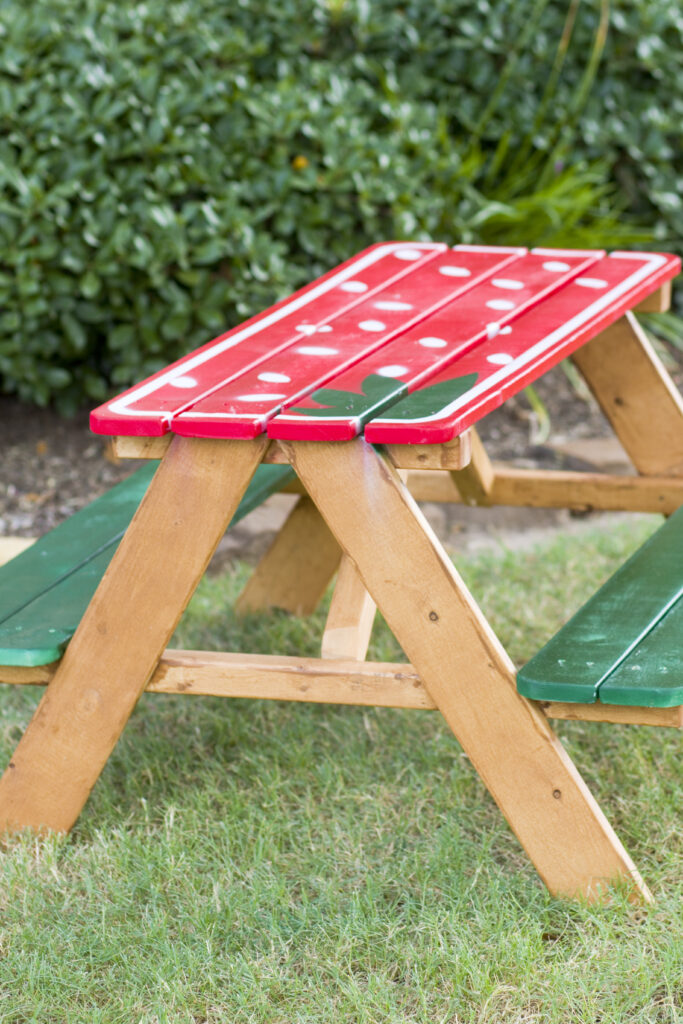
- Exterior semi-transparent stain or paint
- 80-grit sandpaper
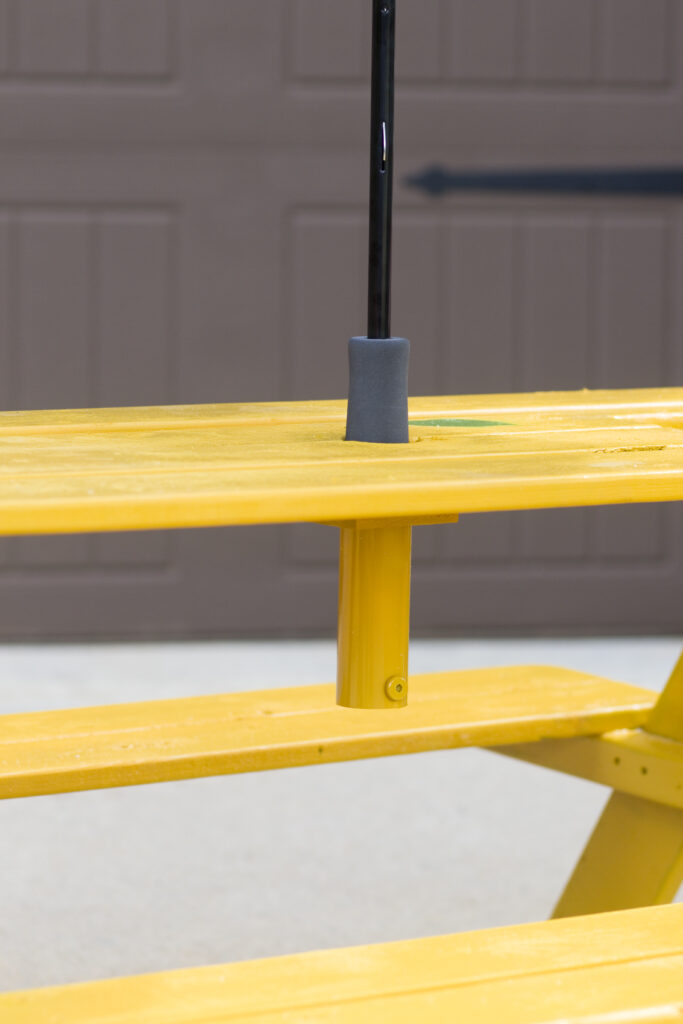
- Small PVC pipe for the optional umbrella sleeve
- Bolt for the optional umbrella stop
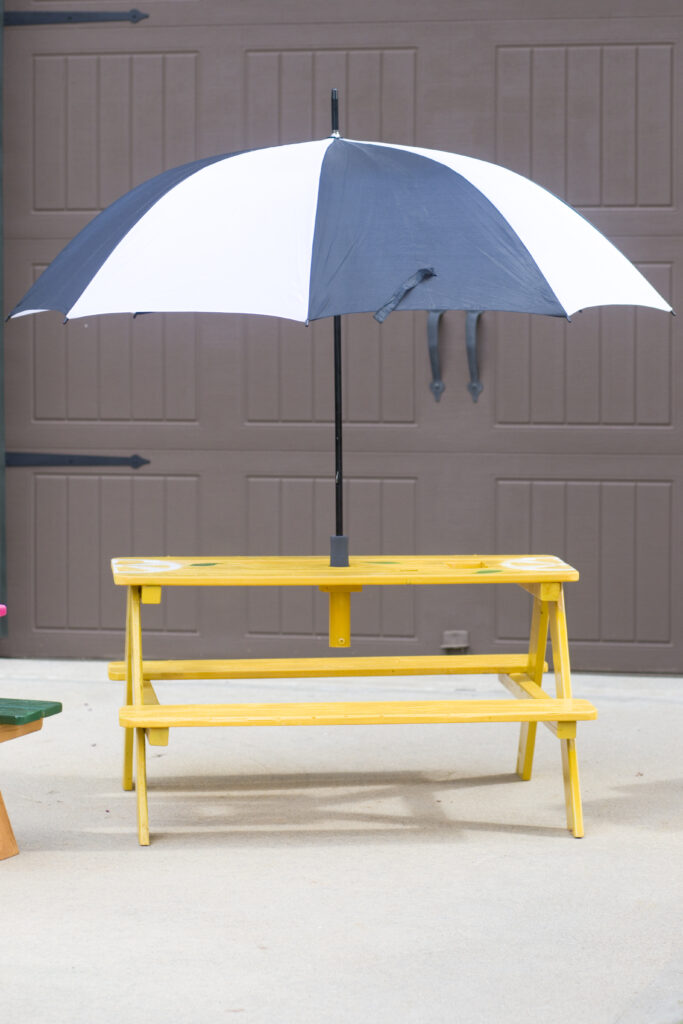
- Rain umbrella
- Small plastic storage bins for the optional tabletop inserts
Tools
- Circular saw
- Jigsaw
- Drill and driver
- Tape measure
- Speed square
- Clamps
- Sander
- Paint can
- Pencil
Steps
- Sort through the lumber and choose the straightest boards available. Trim about 1/2 inch from both factory ends of each 1×4 to create clean, square starting edges.
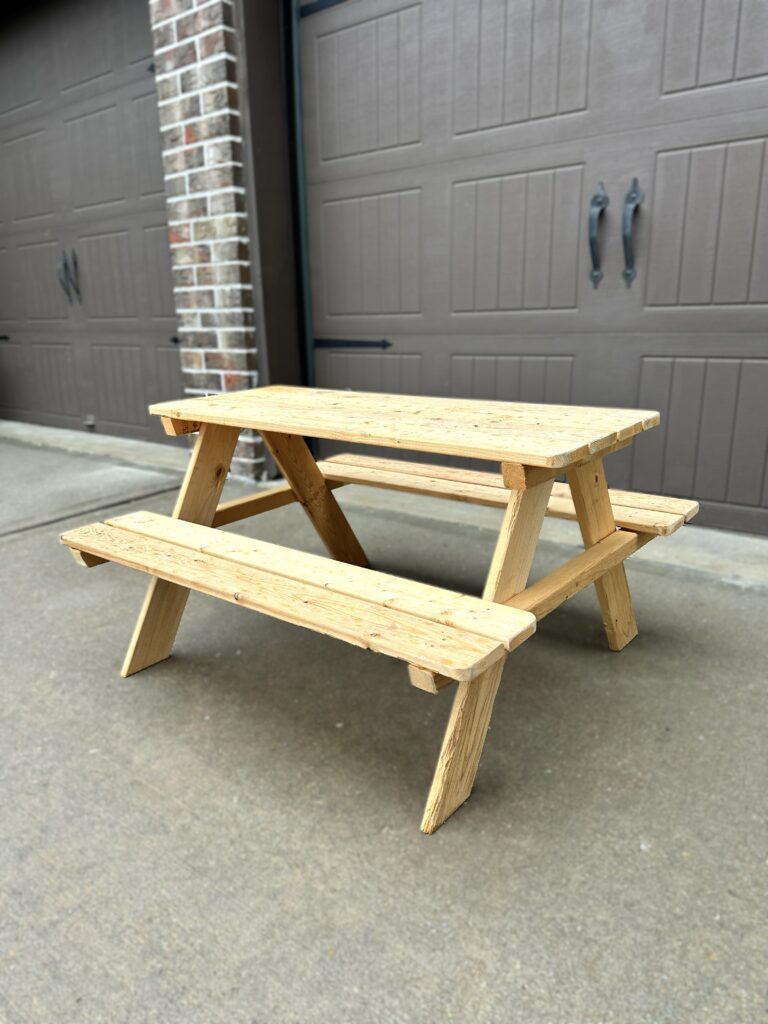
- Cut two 35-inch pieces and one 23-inch piece from each 1×4. After repeating this across all four boards, you should have eight 35-inch boards for the tabletop and seats and four 23-inch boards for the angled legs.
- Mark a 30-degree angle on both ends of each 23-inch leg using a speed square. Keep the cuts parallel so the legs sit flat and meet evenly at the top.
- Cut two 14-inch upper supports and two 31-inch seat supports from the 2×2 lumber. Slightly angle or ease the exposed ends by about 2 to 3 degrees to remove sharp corners.
- Build the first leg assembly by positioning a 14-inch support across the top and a 31-inch support approximately 7 to 8 inches above the bottom of the legs. Face the 2×2 supports toward the inside of the table for a cleaner appearance and improved stability.
- Apply waterproof wood glue at each connection, predrill the holes, and fasten each leg with two exterior screws at each support. Repeat the process to build the second matching leg assembly.
- Stand the two leg assemblies upright and temporarily clamp one 35-inch tabletop board across them. Adjust the spacing until the board has approximately 1 1/2 to 2 inches of overhang at both ends and the base is square.
- Install four 35-inch boards across the top, spacing them evenly. Fasten each tabletop board with two screws into each upper support. Attach two 35-inch boards side by side on each 31-inch support to create the two bench seats.
- Trace rounded corners with a paint can or food can, cut the curves with a jigsaw, and sand all edges smooth with 80-grit sandpaper. Pay extra attention to corners and exposed edges that children may bump into.
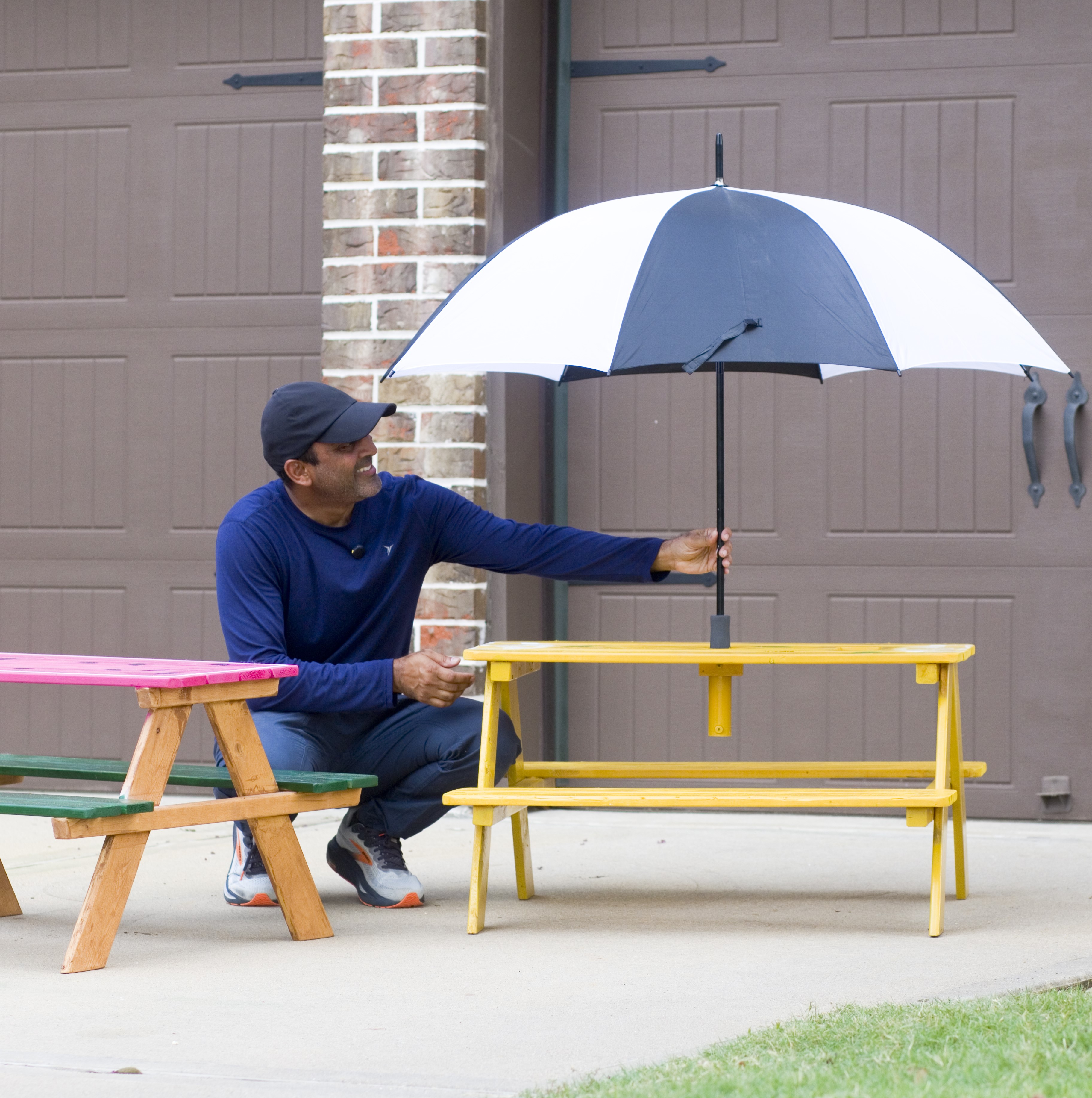
- Apply exterior stain or paint and allow it to dry completely. For optional upgrades, add two hidden 2×2 braces under the tabletop, drill a centered umbrella opening with a PVC sleeve underneath, or trace and cut openings for removable storage bins.
Notes
- A circular saw is enough for the entire basic build, but a miter saw makes repeated straight and angled cuts faster.
- The original version placed the 2×2 supports toward the outside. Moving them to the inside creates a cleaner look and helps stabilize the table after the top is installed.
- Hidden supports underneath the tabletop can reduce bowing if children climb or sit on top. They may be unnecessary when the table is only used by one or two toddlers.
- Predrill near the ends of the furring strips to reduce splitting.
- Furring strips can be twisted or bowed, so spend extra time selecting straight lumber.
- The PVC umbrella sleeve should fit the umbrella pole closely. Add a bolt through the sleeve to prevent the pole from dropping too far.
- Confirm that storage bins have a wide upper lip before cutting the openings. Trace the bin body rather than the outer rim so the lip rests on the tabletop.
- Lumber prices vary by location, so the approximate $15 cost applies mainly to the basic wood structure and does not include stain or optional upgrades.
- This design was originally created for a local daycare and later improved using feedback from viewers on Instagram and Facebook.
Difficulty: Easy
Estimated Time: 4 hours